Clara Lange · 30 September 2026
Shifts in Buyer Behavior Observed in Niche Digital Marketplaces Following Interface Redesigns
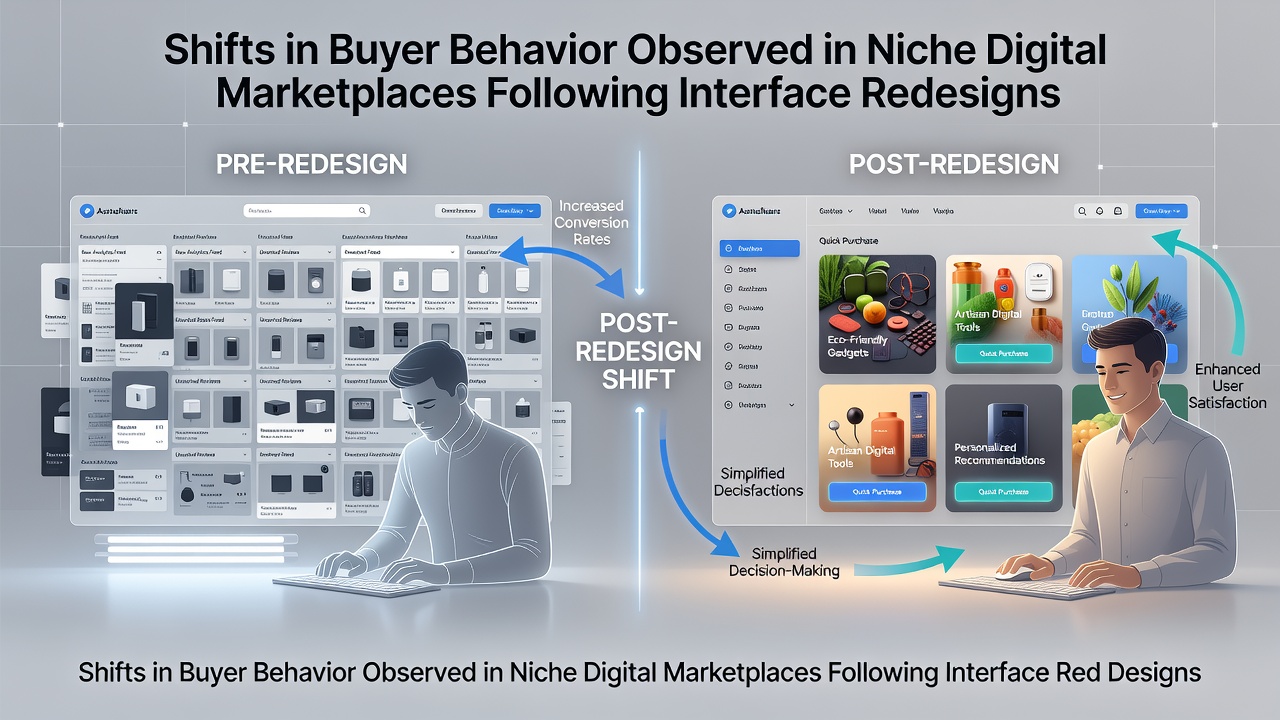
Market analysts have tracked measurable changes in how buyers engage with niche digital marketplaces after platforms roll out interface redesigns, and these adjustments often appear in search patterns, decision timelines, and category exploration habits. Data collected across multiple platforms indicates that redesigns emphasizing clearer category hierarchies and streamlined checkout sequences correlate with shifts toward longer session durations alongside more focused product comparisons. In September 2026 reports released by industry observers, several niche marketplaces reported increases in repeat visits from segments that previously showed high bounce rates on older layouts, while conversion metrics stabilized in categories that received prominent visual updates.
Navigation and Discovery Patterns After Redesigns
Buyers in specialized marketplaces for digital goods frequently alter their exploration routes once interfaces introduce improved filtering tools and contextual recommendations, and these modifications show up in aggregated clickstream data as reduced steps between landing and purchase. Researchers examining logs from platforms that implemented card-based layouts noted a rise in cross-category browsing, whereas previous designs confined most activity to single verticals; the new structures allow seamless transitions that encourage broader discovery without additional search queries. Observers note that September 2026 analytics from several European digital trade groups revealed similar patterns in marketplaces handling creative assets and software licenses, where buyers spent additional time reviewing related items displayed in dynamic side panels.
Trust Signals and Decision Timelines
Interface elements such as verified seller badges, real-time stock indicators, and transparent pricing breakdowns tend to influence how quickly buyers finalize selections, and platforms that integrated these features during redesigns recorded compressed evaluation periods in transaction records. Data from academic studies conducted at institutions tracking e-commerce metrics shows that users respond to prominent security cues by advancing further in the funnel, particularly in niches involving high-value digital licenses or collectible tokens. One analysis covering North American marketplaces highlighted that buyers encountering updated progress indicators completed checkouts at higher rates within the first session, while earlier versions prompted more abandoned carts at intermediate stages.

Device-Specific Adjustments and Regional Variations
Redesigns optimized for responsive displays produce distinct behavioral differences between mobile and desktop users, and mobile sessions often extend when swipe-friendly carousels replace traditional grids. Figures released by Statistics Canada in mid-2026 documented elevated engagement with marketplace apps after visual hierarchy updates, whereas desktop traffic showed steadier but less pronounced gains in time-on-site metrics. Meanwhile, Australian e-commerce associations reported parallel trends in specialized digital asset platforms, where buyers from remote regions interacted more frequently with localized currency displays introduced in recent redesign cycles. These adjustments appear consistent across time zones, suggesting that interface clarity reduces friction regardless of geographic origin.
Category Exploration and Repeat Engagement
Platforms that introduced personalized recommendation engines during redesigns experienced increases in multi-category purchases per buyer account, and longitudinal data indicates sustained activity beyond initial transactions. Research from the OECD on digital marketplace dynamics points to measurable upticks in exploratory behavior when search bars incorporate predictive suggestions tied to past interactions, and such features correlate with higher retention among buyers who previously limited activity to narrow product sets. In one documented case involving a marketplace for educational software licenses, users began sampling adjacent content types after layout changes made cross-promotions more visible, leading to diversified purchase histories tracked over subsequent months.
Conclusion
Collectively, the documented shifts demonstrate that interface redesigns in niche digital marketplaces produce observable effects on buyer navigation, decision speed, and category breadth, with patterns holding across multiple reporting periods including those captured in September 2026 datasets. Continued monitoring by regulatory bodies and research organizations will clarify how these behaviors evolve alongside further platform iterations, providing ongoing reference points for marketplace operators seeking to align layouts with user activity trends.